Ten Piano Covers of Hard Rock Songs That Will Blow Your Mind
Piano music isn’t all Beethoven and Brahms. With the versatility of the piano, you can take almost any piece of music and turn it into a wonderful composure made for the piano. When most people think of piano practice they have visions of never-ending repetitions of Chopsticks and Heart and Soul. You can obviously practice … Continued
Ten Piano Covers of Hard Rock Songs That Will Blow Your Mind
Piano music isn’t all Beethoven and Brahms. With the versatility of the piano, you can take almost any piece of music and turn it into a wonderful composure made for the piano. When most people think of piano practice they have visions of never-ending repetitions of Chopsticks and Heart and Soul. You can obviously practice with these pieces, but they’re not your only options.
Below are several hard rock songs played exclusively on the piano. There are varying levels of expertise represented as well as different types of keyboards ranging from simple keyboards to elaborate synthesizers and even a Baby Grande.
It is amazing to see, and more importantly hear, the difference between the original versions of these songs and the new piano covers.
1. Metallica, “Nothing Else Matters”
2. Pearl Jam, “Black”
3. Nirvana, “Smells Like Teen Spirit”
4. Blink-182 “What’s My Age Again?”
5. AC/DC, “You Shook Me All Night Long”
6. Lynyrd Skynyrd, “Freebird”
7. Alice in Chains, “Man in the Box”
8. Jimi Hendrix/Bob Dylan, “All Along The Watchtower”
9. Led Zeppelin, “Stairway To Heaven”
10. System Of Down, “Toxicity”
The artist playing “Toxicity” is an accomplished pianist so this is not the way a beginner would play this piece. That being said, this is an excellent example of what you can do with a piano and practice.
After seeing these videos and hearing these songs played entirely on the piano, it is evident that piano music can be as complex or as simple as you’d like it to be. Part of the fun of playing piano is the creativity you can bring. You can play what you like and create the sound you want. The piano is a versatile instrument for all learning levels and all music tastes!
12 Surprising Celebrity Piano Players
Playing piano is something you expect from a lot of famous musicians, but how about other types of celebrities, such as actors, directors, and politicians. After all, It’s a tough skill to learn and takes time to learn. So it’s rather surprising, when someone who became famous in a field aside from music, knows how … Continued
12 Surprising Celebrity Piano Players
Playing piano is something you expect from a lot of famous musicians, but how about other types of celebrities, such as actors, directors, and politicians. After all, It’s a tough skill to learn and takes time to learn. So it’s rather surprising, when someone who became famous in a field aside from music, knows how to play the piano well. So who are these celebrities who are killing it with the piano?
Jamie Foxx
First up, Jamie Foxx is already a multi- talented man who is an actor, musician, and comedian. But, he also knows how to play piano like a great! In the movie Ray, where he takes on the role of Ray Charles, he is playing all of the pieces without any assistance, very impressive! He’s even done impressions of Prince, so this man has a talent for the keys.
Jeff Goldblum
The actor famous for his roles in Jurassic Park and Independence Day also knows how to play the piano. He specifically specializes in Jazz, one of the harder genres to play on the piano.
Hugh Laurie
His role in the Fox TV show House is what made Hugh Laurie famous, but his skill in playing the piano is very noticeable. He released an album of him just playing the piano; then he proceeded to go on tour. So his side hobbies is a serious one!
Justin Bieber
A lot of people have a strong dislike for Justin Bieber, saying he is a no talent hack. But, when it comes down to it he can play many different instruments very well, including the piano, which he’s been playing since even before he was a teen.
Vladimir Putin
The Prime Minister of Russia, Vladimir Putin is incredible on the piano. He played the piano on live television for all the world to see, and he showed that he has talent on the keys. Excellent job Vladimir!
Richard Gere
Richard Gere, known for movies such as Pretty Woman, American Gigolo, and Runaway Bride, started quite early as a musician. He played many instruments in high school and even wrote for the school’s productions. He is so well versed in piano, that he also composed a piece of music for the film he starred in, Pretty Woman.
Clint Eastwood
The Western movie legend himself, Clint Eastwood was thinking of becoming a musician at one point in time, as he was an accomplished pianist before his acting kicked off. He has composed various pieces in a few of his films, such as Million Dollar Baby, Mystic River, Changeling, and Hereafter.
Condoleezza Rice
The first African-American Secretary of State, Condoleezza Rice learned piano when she was a teenager and was dreaming of becoming a concert pianist. Apparently, for some reason, she went another way and got her degree in Economics. But, whenever she gets a chance she still plays the piano to this day.
Dustin Hoffman
Known for films such as Tootsie and Rainman, Dustin Hoffman is well versed in piano.
Kelsey Grammar
Known for his role in Frasier, he played the piano throughout the show.
Britney Spears
Although Britney is well known for her voice, most people don’t know that she can play a few instruments, including piano.
Sean Hayes
Well, known from Will and Grace supported himself as a classical pianist before he started making money from his roles.
Apps to Help You Learn Piano
Learning piano is an exciting thing. Many people learn as children, via private lessons. But this isn’t true for everyone. Even if you are a full-fledged adult, you can still learn to play beautifully. In today’s fast-paced world, full of technology and information, it’s easier than ever to pick up a new skill. Whether you’re … Continued
Apps to Help You Learn Piano
Learning piano is an exciting thing. Many people learn as children, via private lessons. But this isn’t true for everyone. Even if you are a full-fledged adult, you can still learn to play beautifully. In today’s fast-paced world, full of technology and information, it’s easier than ever to pick up a new skill. Whether you’re interested in crocheting, computer programming or learning to play the piano, there’s an app out there for you. Consider the these apps to add to your repertoire. You’ll be playing like a pro in no time.
Metronome
This app is essential, as you will know if you’ve taken any formal lessons. A metronome is a device that will help you to keep rhythm, which is very important when first starting out. Without rhythm, your playing will fall flat. Save some money and download this app instead of rushing out to the store to buy one.
forScore
Another essential app. This is basically digital sheet music. You’ll be able to stay more organized, all while retaining speed. Before, people use to try PDFs and other files, but they take forever to load and it can be awkward when you’re waiting to see what to play next. This app has raver views, and boasts the speed as quick as paper.
Tenuto
This is the perfect app for all of you out there who need to learn music theory. Though you are probably learning all about it in your private lessons, extra practice is always beneficial. The app has many cool features, including interactivity that will let you know how what your playing relates to music theory. Pretty cool!
Virtuoso Piano Free 2D
Though an electronic keyboard is no substitute for an actual piano, it’s obviously true that you won’t always have a piano at reach when you want to practice. When times like this arise, turn to this app and try your best. It may not be the real thing, but it can still help you to memorize notes and sheet music. This app is the best alternative to the real thing, using as many measures as possible to make the experience feel more authentic.
Most of these apps are made specifically for the iPhone, but there are many great alternatives for Android phones and operating systems. All you have to do is search. These apps are just the tip of the iceberg when it comes to learning apps. There are many fun apps to help you learn piano, and these are great places to get started. With a little research, it is sure that many more can be found. Remember, with the new dawn of technology and the explosion of information brought to you via the Internet, it is possible to learn anything. No matter your age.
10 Tips to Keep Your Kids Playing Piano
1. Eliminate the distractions Kids get bored easily. They often move on from one shiny thing to the next. Because of this, it is important that you set a special place for your kids to play the piano without any distractions. Take away their tablet, laptop, and even their smartphone during piano playing time. 2. … Continued
10 Tips to Keep Your Kids Playing Piano
1. Eliminate the distractions
Kids get bored easily. They often move on from one shiny thing to the next. Because of this, it is important that you set a special place for your kids to play the piano without any distractions. Take away their tablet, laptop, and even their smartphone during piano playing time.
2. Keep it short
Instead of scheduling one thirty minute piano session every day, consider breaking it down. Try scheduling two fifteen minute piano sessions with one in the morning and one in the evening. Keeping it short will make the piano session less stressful and more fun. When you work on something for longer periods of time, it becomes more of a chore.
3. Use a timer
Kids tend to think concretely. Simply telling them that they need to practice for fifteen minutes can seem interminable to them. Setting a timer for fifteen minutes allows them to see how much time they have left. Also, it puts them in control of the lessons, resulting in less stress.
4. Keep it simple
Teach your kids one new thing per session. Don’t overwhelm them by having them memorize an entire song in one fifteen minute session. You will only create a stressful piano lesson. Instead, when you are teaching your kids something new, break it down into small, simple parts.
5. Make it routine
Schedule your kids’ piano lessons at the same time every day. If your kids eat breakfast at the same time every day, you have established a routine. Do the same with piano lessons. Establishing a routine creates a habit and habits are for the long haul.
6. Don’t get mad
Don’t get frustrated with your kids. Kids tend to imitate what they see. Remember to always encourage your kids. Encouragement can go a long way in creating well-adjusted, happy kids.
7. It’s play not practice
Sometimes changing the wording can go a long way. Don’t tell your kids to practice the piano. Instead, tell them to play the piano. Saying play instead of practice automatically makes it more fun. Making piano lessons more fun means that your kids will want to play, will learn faster, and will be generally happier.
8. Get Involved
Playing the piano does not have to be a kids’ activity. You can learn to play the piano too. Make a game out of it. Play the piano together with your kids. Playing with your kids means more bonding time. Plus, you get to learn a new skill. What could be better?
9. Use bribes
If all else fails, bribe, bribe, and bribe your kids. Tell your kids that you will get them a ice cream cone for fifteen minutes of playing the piano. Or, tell your kids you will take them to the zoo in exchange. Just remember to keep your promises!
10. Have fun
This is perhaps the most important tip of all. Learning how to play the piano should always be fun. If something feels like a chore, then your kids will be more likely to procrastinate and not practice. So, roll up your sleeves, gather your kids, and get to playing!
7 piano exercises to make you a better player
Piano exercises provide a platform for the development of finger, arm and hand techniques for playing the piano. As a beginner, accurately positioning your fingers is essential as it prevents injury and improves your technique. Muscles in our fingers play a significant role in executing and controlling our desired sounds, and good finger exercises can … Continued
7 piano exercises to make you a better player
Piano exercises provide a platform for the development of finger, arm and hand techniques for playing the piano. As a beginner, accurately positioning your fingers is essential as it prevents injury and improves your technique. Muscles in our fingers play a significant role in executing and controlling our desired sounds, and good finger exercises can help beginners to give themselves a head start in their development. Gaining proper finger technique in learning how to play the piano involves using our fingers as the primary driving source of power.
The seven exercises below, if done regularly and with consistent tempo, will help you know to improve the independence of each finger and to get to know the geography of the piano.
Five note pentascales using one finger per note and at a time
Pentascales help us understand how different keys work and also assist us in gaining better control of our fingers. During this exercise, it is crucial you play a finger at a time and then take a moment to listen. Also important is learning to change dynamic ranges using your finger muscles. Learning dynamic range helps you take your expressive skills to another level.
Learning the five note pentascales exercise using one finger per note may be particularly challenging for people with weak fingers. A few exercises to strengthen your fingers include focusing on your weaker hand and fingers and also playing major, minor and chromatic scales.
Keeping your fingers in a firm position while playing
In this exercise, you should bend the knuckle closest to your fingertip while having your hands level albeit not necessarily on the keys. Maintain the finger position while lifting your hand and then let it fall on the key. This exercise prepares you for the sensation of playing with a firm finger position and focusing fully on getting a solid finger position.
Going through Hanon and Czerny technique books
These books help a lot in getting your fingers to co-ordinate if applied with the exercises mentioned here. Hanon books are simpler than Czerny’s, so choose wisely.
Over-Legato
This is a great exercise for developing a good awareness of your fingers and learning to move each one individually. While playing the notes, make sure each note overlaps with the following note. It can be quite difficult, but you need to do it consistently.
Playing two notes with one hand at a time
It involves playing with two different fingers simultaneously at a time while other fingers relax. You need to check if the other fingers are relaxing. Often, they tend to get involved even if they are not needed. This applies especially to the pinky finger.
Full (1 or 2 octaves) scales
Practicing this exercise while preparing the thumb before it is played, is helpful. After playing a particular note with the right index finger, immediately place the thumb on or near the next note to be played. If this exercise is done regularly, it will eliminate bumps in the scales and help you improve your speed and accuracy.
Practice jumps
Making quick and wide jumps while playing notes and chords can be a hard task. Typically people without jump training tend to move their hands in an inverted V motion. Coming down at an angle significantly reduces your accuracy. The movements involved in a jump include a horizontal movement of the hand and the final downward motion to play. You need to make the horizontal motion as fast as possible and practice on the location of the keys possibly before you start playing. If this is done accurately making jumps won’t be hard again.
Tips for cleaning your piano
Pianos, as we know, are some of the most beautiful additions to homes, not forgetting the big role they play in the entertainment of guests in our homes. Therefore, it goes without saying why they require regular maintenance. Caring for your piano is important for maintaining it at an excellent condition while ensuring that it … Continued
Tips for cleaning your piano
Pianos, as we know, are some of the most beautiful additions to homes, not forgetting the big role they play in the entertainment of guests in our homes. Therefore, it goes without saying why they require regular maintenance. Caring for your piano is important for maintaining it at an excellent condition while ensuring that it performs optimally. One of the most effective ways of caring for it is by ensuring that you clean it regularly.
In cleaning your piano, you need to be very cautious. You must carefully consider the type of finish used for your piano and the material used for the keys before you can begin the cleaning. Otherwise, you might end up doing something or using a product that maybe damaging on your piano.
Dusting
The first step to cleaning your piano is dusting. This step helps you get rid of excessive dust before you can begin the actual cleaning. When dusting, it is advisable that you use a feather duster. This is to avoid rubbing dust on the piano’s surface as this may cause scratches, same to when a dry cloth is used.
Cleaning the Finish
Cleaning the piano’s finish is important in removing any dust that might not have been cleared in the dusting process. Also, it helps in the removal of fingerprints. When cleaning the finish, use a damp piece of cloth. Ensure that the cloth is made of soft fabric, such as cotton. Also, take note of the word damp, not wet. Use straight instead of circular motions when cleaning the finish. This should prevent swirl marks left after cleaning.
In cleaning the finish, it is also important to ensure that water used in dampening your cleaning cloth is filtered. By all means, avoid using mineral water as some of the minerals tend to alter the appearance. When cleaning the finish, do avoid interior parts that might be exposed. If you are not an expert piano technician, you might end up damaging it.
Cleaning the Keys
First, you have to understand the material used for your keys. Some keys are made of plastic while in other cases they might be made of a more expensive material, ivory. When cleaning plastic keyboards, use a mild solution. Avoid using harsh cleaning agents on keyboards. Dampen your cloth using the mild solution. Ensure that the cloth is properly wrung such that it is only damp. This is to prevent getting any water in the keys as this may compromise their performance. When cleaning, use up- and- down motions rather than side- to – side motions. This should prevent dirt, oils and moisture from getting deep into the sides.
When cleaning ivory keys, the process might be a little bit different. The first thing you need to note about this material is that it is highly porous. Hence, you should avoid using tap water in cleaning it. With time, you might notice that your ivory keys have yellowed. To get rid of this yellowing, use a soft cloth, damped with a solution of warm water and vinegar. Use the same process as in cleaning plastic keys.
Conclusion
Giving your piano a regular clean will ensure that dust and oils do not accumulate and compromise its functionality. You can also take an extra measure to ensure that you clean your hands thoroughly, to rid of oils and sweat, every time you want to use your piano. Also, ensure that you cover your piano when not in use. This plus regular maintenance and cleaning services from a professional will ensure that your piano serves you for a very long while.
Top 4 Things To Look For In Used Pianos
If you’re considering buying a used piano, there are four main factors that demand your attention. If you carefully consider these factors, your piano purchase should proceed without a hitch. Condition Oftentimes used pianos can be much better in quality than a brand new piano. The fact that someone else has played it over a … Continued
Top 4 Things To Look For In Used Pianos
If you’re considering buying a used piano, there are four main factors that demand your attention. If you carefully consider these factors, your piano purchase should proceed without a hitch.
Condition
Oftentimes used pianos can be much better in quality than a brand new piano. The fact that someone else has played it over a period of time gives the instrument character.
It also makes it trustworthy. Just like you can trust a good used car that’s been well maintained, you can trust a used piano. However, you need to run a thorough check to make sure that all the components of the piano are in proper working order. Inspect the structure of the piano as well as its sound quality.
Size/shape
When purchasing a piano, try to keep in mind the room in your house where you plan to place the instrument. A piano is a fairly massive object, and its presence in your house can change the feel of your everyday life.
Use your powers of imagination to envision the piano you’re looking at sitting in your home. Will it fit in aesthetically?
Mechanics
Investigate how the piano actually works, and whether you’ll be able to fix it up if the need arises. Unlike new pianos, which generally come with warranties, used pianos usually become the buyer’s responsibility alone as soon as the purchase takes place.
The piano may be in good condition, but make sure that you have the wherewithal to sustain this condition.
Aura
This factor is a little more mysterious and less objective than the others. Most instrument owners will attest to the fact that every instrument comes with its own “personality.” This is true of pianos in general, and used pianos especially.
Not only does the instrument have its own aura, it also absorbs the aura of its previous owners and situations. It’s very important that you actually see the piano in person before you buy it in order to pick up on the subjective feeling you get from it.
This may sound silly, but it’s really a rather important variable in whether you’ll be happy with your purchase.
If you pay attention to all these factors, then you’ll surely be able to find a used piano you’ll be happy with for years to come.
Grand Pianos vs. Upright Pianos: What’s the Difference?
Grand Versus Upright Grand pianos and upright pianos are the two basic styles of pianos available to consumers. Both come in different sizes, which affects the instrument’s sound. The larger a piano, the longer its strings and the larger its area of soundboard. Whereas a grand piano increases in length, upright pianos (also called vertical pianos) increase … Continued
Grand Pianos vs. Upright Pianos: What’s the Difference?
Grand Versus Upright
Grand pianos and upright pianos are the two basic styles of pianos available to consumers. Both come in different sizes, which affects the instrument’s sound.
The larger a piano, the longer its strings and the larger its area of soundboard. Whereas a grand piano increases in length, upright pianos (also called vertical pianos) increase in height.




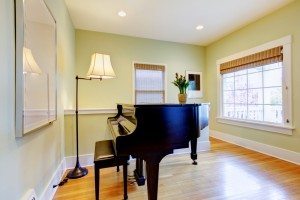 Pianos, as we know, are some of the most beautiful additions to homes, not forgetting the big role they play in the entertainment of guests in our homes. Therefore, it goes without saying why they require regular maintenance. Caring for your piano is important for maintaining it at an excellent condition while ensuring that it performs optimally. One of the most effective ways of caring for it is by ensuring that you clean it regularly.