When you are getting ready to move in the Atlanta area, one might think that all you need to do is hire a good moving company. While this may be true for most of your belongings, if you have a piano, then you need to consider hiring professional piano movers Atlanta to help protect your piano … Continued
Piano Movers Atlanta Services
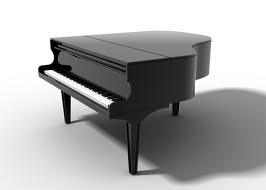
When you are getting ready to move in the Atlanta area, one might think that all you need to do is hire a good moving company. While this may be true for most of your belongings, if you have a piano, then you need to consider hiring professional piano movers Atlanta to help protect your piano from potentially permanent damage.
Most movers can take care of lifting and moving the majority of your things but piano moving is simply not the same as moving a television or a dining room table. Not only could the weight of most pianos injure even the most experienced of movers, lifting, shifting or dropping the piano incorrectly puts the piano in danger as well.
Potential Damage
There are several ways a piano might be damaged when moved by inexperienced people, even those who move furniture for a living. For example, the piano soundboard might be damaged or destroyed. In addition, the beautiful wood exterior of the piano can easily end up scratched or dented when movers are trying to lift, load or position a piano that is several hundred pounds in weight. This damage is likely permanent.
Potential Injury
While most moving companies are insured, you might find yourself on the receiving end of a worker’s compensation claim if one of the piano movers is injured trying to move the piano, since a piano is not a typical furniture item and may not be covered by the moving company’s insurance policy.
Proper Equipment
Many moving companies have dollies, blankets and a truck. However, a prepared, professional piano moving company will have a piano dolly, a humpstrap and a piano belt as well as a piano board for storage. Never allow anyone who does not have this specific piano-moving equipment to shift, much less move, the piano.
Cooper Piano
Now that you know why you should not allow a standard moving company to move your piano, contact Cooper Piano in Atlanta for piano moving or storage. We are piano movers Atlanta professionals who use the proper equipment to protect the piano against any damage and are insured, bonded and licensed. Reach us at 404-329-1663. Do not trust your precious piano to anyone but professional piano movers Atlanta.
All Pianos Are Not Created Equal – Pinblocks Are Life Of The Piano
If there was one part of the piano considered the most important, one of the piano features which is most vital and integral to a piano’s quality is the pinblock. The pinblock holds the tuning pins that in turn, hold each piano string. Pinblocks must hold up to the immense tension applied by the tuned … Continued
All Pianos Are Not Created Equal – Pinblocks Are Life Of The Piano
If there was one part of the piano considered the most important, one of the piano features which is most vital and integral to a piano’s quality is the pinblock. The pinblock holds the tuning pins that in turn, hold each piano string. Pinblocks must hold up to the immense tension applied by the tuned piano strings — as much as 20 tons of tension, the equivalent of 10 average cars. With that kind of pressure, you can see why the pinblock is so important and, since all pianos are not created equal, it’s important to do your research.
Quality pinblocks maintain the tuning stability of a grand piano and contribute to the overall tone and sound quality. The top manufacturers use hard rock maple for the pinblock, the industry standard and a tried and true wood.
Unfortunately, a few newcomers to the piano industry have come on the market lately touting an inferior pinblock construction and claiming to use more wood than traditional pinblock construction. And in a sense, they’re right. These companies use layers and layers, or plies, of thin beech wood glued together. They claim that more plies of wood create a stronger pinblock. What they don’t tell you, though, is that their pinblock’s strength comes from the glue holding the wood together, not the wood itself.
Cooper Piano has a long standing tradition of fine wood craftsmanship has taught us that more is better — more wood, that is, not more plies or more glue. Time and expertise have proven again and again that solid wood creates the strongest pinblocks that promise to stand up over time to the immense tension from the piano strings. The finest concert pianos still use no more than six plies in pinblocks and usually an average of four plies.
When it comes to your investment in a piano, you want to know there is more holding the heart of your instrument together than just some glue. We’d love to hear about your experiences with pianos and any stories you might have to share about inferior vs. quality pinblock construction.
All Pianos Are Not Created Equal – Backframe Integrity, Short Posts
Our last blog post talked about the importance of having six full-size backposts in the backframe of your vertical piano. Some manufacturers have taken to using half-size posts on the ends and these half-size posts will not provide a piano with the same tuning stability as full-size posts will. We also have several concerns about … Continued
All Pianos Are Not Created Equal – Backframe Integrity, Short Posts
Our last blog post talked about the importance of having six full-size backposts in the backframe of your vertical piano. Some manufacturers have taken to using half-size posts on the ends and these half-size posts will not provide a piano with the same tuning stability as full-size posts will.
We also have several concerns about another new vertical piano construction "short cut" some manufacturers have begun using — the short post. Like half-size posts, the short post compromises a piano’s overall integrity and will not provide the same kind of long-term tuning stability a higher quality grand piano will have.
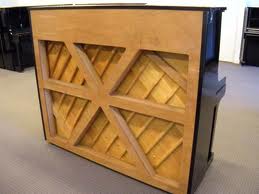
When you look at the backframe of a vertical piano, you should see six posts running from the top to the bottom of the piano’s backframe. In high quality pianos, these posts run up into the frame itself either in a mortise and tenon joint — a strong, sturdy carpentry joint — or with filler blocks cut, laminated, fitted and glued between the posts across the top and bottom of the backframe. Either of these construction methods means the posts provide superior support for the pinblock, where the strings attach to the tuning pins. The posts, frame and pinblock together have to support at least 20 tons of string tension. The stronger the construction, the more stable the piano.
Unfortunately, some companies take a short cut when constructing the backposts to save on labor costs. Instead of extending the posts into the frame, the companies simply fit the posts into the frame. Basically, they build a picture frame and slide the posts in. These short posts do not extend into the frame and do not support the pinblock or tension nearly as well as full posts.
Pianos that lack good piano tuning stability will cost you much more over the years in tuning costs and you may also notice a difference in overall sound quality. Your piano could also suffer from structural damage to the backframe over time as less stable frames tend to twist and warp more easily. Ultimately, your piano won’t last as long and will have a much lower value over time.
A piano is one purchase where you don’t want to accept short cuts in manufacturing. Sure, these pianos might cost less up front, but over time, the investment won’t pay off. Instead, know what to look for in your piano’s backframe.
I recently became the proud owner of my first baby grand piano. As a child, my parents supported my love of music, and I was encouraged to take piano lessons using the studio, upright piano in our home. This heirloom had sentimental value as it had been passed down from one generation to the next. … Continued
Baby Grand Piano Placement In The Home
I recently became the proud owner of my first baby grand piano. As a child, my parents supported my love of music, and I was encouraged to take piano lessons using the studio, upright piano in our home. This heirloom had sentimental value as it had been passed down from one generation to the next. My mother inherited the grand piano just before my sixth birthday and felt it was a perfect tool to introduce me to the wonderful world of music through piano lessons.
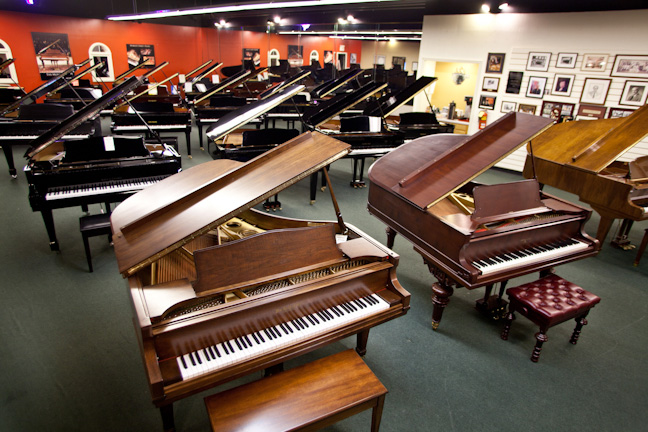
Years later, with a family of my own, I decided it was time to purchase a piano for me and my young children to enjoy. I opted for a baby grand from Cooper Music, whose motto is to "Build a better world through music education." I love the credo and am proud of my decision to invest in the educational, musical future of my children. The question is, "Where is the perfect spot for my new baby grand piano"? Consulting with the staff at Coopers, I was told that a piano should never face an outside wall. It should be placed in a spot facing out into a room to make for better acoustical sounds. It should not be placed too close to a window, where sunlight could have negative effects both on the finish and acoustics of a baby grand. If the piano is near a window, the window should be covered with curtains or a shade. Likewise, never place a baby grand piano near a radiator, ceiling fans or any kind of extreme heat or cold. The keyboard should be openly visible so that a player is enticed to play and guests are inspired by not only the sound, but the intricate handwork of the player.
Once your baby grand piano is in place to your satisfaction, rearrange your furniture so that it is the focal point of the room. After all, nothing else (other than the person playing it,) can add such style and grace to a room.
When you look at a piano, what you see is not what you get and you can’t gauge piano quality on looks along. But the exterior of the instrument, known as the encasement, still matters a great deal in the overall quality of a piano. All pianos are not created equal so not all piano … Continued
All Pianos Are Not Created Equal – Encasements
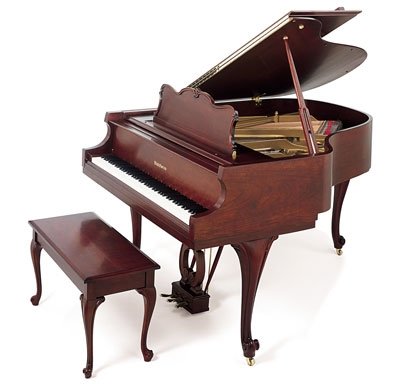
When you look at a piano, what you see is not what you get and you can’t gauge piano quality on looks along. But the exterior of the instrument, known as the encasement, still matters a great deal in the overall quality of a piano. All pianos are not created equal so not all piano companies put as much emphasis on the encasement as others. It’s important to understand why a quality encasement matters and what to look for.
The encasement protects the interior workings of the piano from environmental damage. The encasement also adds to the piano’s value because this large instrument is much more than a way to make music. In most homes, pianos take up a large amount of space and act as furnishing and home accent. The higher quality the encasement, the more value it brings to your home, just like any other fine furniture.
A high-quality grand piano encasement should conform to the style and standard of other fine furniture. It should be crafted from solid wood or wood veneer with a deep stain and finished with several coats of genuine lacquer, not synthetics such as urethane resin. Synthetic finishes don’t touch up as well and are difficult, if not impossible, to repair.
The construction of the encasement matters as well. The industry standard calls for "balanced case" construction meaning all panels in the encasement are five-ply — a corestock in the middle, crossbanding veneer on either side of the corestock and facing veneer on the exteriors. The balanced construction prevents warping and splitting, which not only ruins the aesthetics of the piano but affects the sound quality and structural integrity as well.
Finally, all of a piano’s hardware such as hinges, handles or pedals should be made from solid brass or strong metals plated with brass. These small touches make a difference when you’re investing in a major piece of furniture like a piano, not to mention a quality instrument.
As you shop for your piano, the exterior is one of the piano features you will see first and what will initially attract you to the instrument. Make sure the encasement holds up to the high standards you have for other fine furniture by knowing what to look for. Not only will your new piano look good, but you’ll know it is good as well.
When I went piano-hunting for my youngest daughter’s classical music class, I was bombarded by a host of different options; so much so that it became a chore to choose the right one. I wanted to make sure I got the right size, performance and acoustics for a lifetime of practicing and playing, and was … Continued
Baldwin Piano Sizes
When I went piano-hunting for my youngest daughter’s classical music class, I was bombarded by a host of different options; so much so that it became a chore to choose the right one. I wanted to make sure I got the right size, performance and acoustics for a lifetime of practicing and playing, and was able to settle on picking between the Steinway and the Baldwin piano brands. Feeling a bit patriotic, after comparing their features and finding the two to be equally highly-regarded by experts, I went with the Baldwin piano brand, which has been around for well over a century and offers both digital and acoustic pianos in baby grand, upright and full grand sizes and make.
Room Sizes Matter When Buying a Piano
I spoke with a piano expert who took the details of our living-room dimensions and estimated sound quality. She advised that out of all the options, the Baldwin upright piano that might make the best fit for us was the Acrosonic console piano, due to its smaller size and very fair price, despite not compromising depth of sound and quality. My daughter was ecstatic; as she found that despite the shorter strings – a necessity for a smaller piano – they produced a sweet, resonating twang that suggested more depth than they could have in the chassis. Overall, we settled on the three most important considerations as being satisfied by our Baldwin purchase:
– The piano size was excellent for our space. Upright pianos are taller, and more compact; thus, they are given to being a better fit for smaller houses. Concert grand pianos are pretty much for mansions when personal ownership is the case. – Sound quality. Our Baldwin Acrosonic piano displayed a unique tone in the upper registers that was very endearing; grand pianos tend to have fuller sounds suited to large halls. – Cost. For the average person; cost vs. performance is the most important factor in most purchases, and isn’t exclusive to pianos. The Baldwin piano was a worthwhile investment; yet far cheaper than any grand or even baby grand piano.
It took a few decades for Baldwin brand pianos to catch up with the almost mythical Steinway; but, as a proud owner of one of their musical instruments, who has been to many Steinway concerts, I can personally say that Baldwin is no longer in second place.
All Pianos Are Not Created Equal – Backframe Integrity
Think about the piano like a human body for a minute. What holds us erect and upright is our skeleton and more specifically, our spine. The spine — our backbone — insures our strength and integrity. If our back isn’t in good health, our whole body suffers. The same is true for pianos. The back … Continued
All Pianos Are Not Created Equal – Backframe Integrity
Think about the piano like a human body for a minute. What holds us erect and upright is our skeleton and more specifically, our spine. The spine — our backbone — insures our strength and integrity. If our back isn’t in good health, our whole body suffers.
The same is true for pianos. The back frame of a piano provides the strength and integrity for the entire instrument. This frame supports the significant tension of the strings, about 20 tons of tension to be exact. An inferior backframe won’t support the string tension as well, significantly increasing the need piano tuning more regularly and eventually devaluing your piano in the long run.
All pianos are not created equal and as you shop for your piano, there are at least two characteristics you want to look for in the backframe. First, take a visual inspection of the backposts. Vertical pianos should have six full-size, full-length backposts. Some manufacturers claim to have six backposts but use half-posts on the ends. A half-size post simply can’t hold up to the string tension over time. Walk away from any grand piaon that doesn’t have six full-length backposts. The posts should also be full-size meaning they have significant width and depth, not just height.
You also want to evaluate the type of wood used for the posts. Spruce is a common material for backposts because it is a strong wood for it’s weight and resists splitting and cracking.
When your back hurts, it can ruin your day and back injuries seriously impair your quality of life. Pianos need strong backs, too, and a piano’s back health start with the backframe and posts. As you evaluate your piano purchase, pay close attention to this integral piece of piano construction to get the best piano you can buy.
Once you’ve chosen and bought your piano, you probably can’t wait to get home and play your new instrument. But your shopping trip isn’t done yet, you still need to purchase the grand piano bench before you can really start playing. And just as all pianos are not created equal, the same holds true with benches, … Continued
All Pianos Are Not Created Equal – Benches
Once you’ve chosen and bought your piano, you probably can’t wait to get home and play your new instrument. But your shopping trip isn’t done yet, you still need to purchase the grand piano bench before you can really start playing. And just as all pianos are not created equal, the same holds true with benches, so you need to know what to look for before making your final choice.
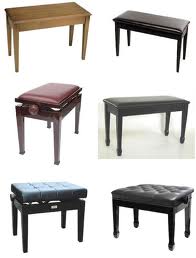
There are really two considerations when choosing a piano bench — style and comfort. First, you want to choose a piano bench that matches the style of the piano you purchased. The bench style should match the piano style so the pair looks like a cohesive unit. Choose a modern bench for a modern piano and a more classical look for an antique or refurbished piano. The veneers on the bench and piano should match as well. Digital pianos and Grand pianos require totally different styles too.
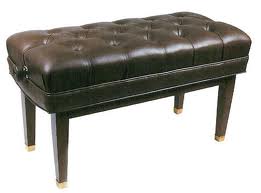
Secondly, and really most importantly, you need to choose a stool based on comfort. You will spend countless hours sitting on your bench and your comfort will impact the quality of your playing. Choose a bench with luxurious fabric and a thick, padded top to keep your sit bones from getting uncomfortable.
You should also check the height of your bench against your piano or choose an adjustable stool. Computers and desk jobs aren’t the only activities that can cause repetitive stress injuries. So can playing piano. Ergonomics matter when you play. An adjustable bench allows you to sit perfectly while you play to maintain optimum wrist and arm health and allows for multiple musicians in a home to sit comfortably.
Owning a piano is similar to owning a car. Even if you have a quality model, there is still a need for basic maintenance and service to keep it running at its best, and extend its lifespan. Baldwin Pianos are a trusted name in the industry, and even with exemplary craftsmanship they still require the … Continued
Baldwin Pianos Need Service Also
Owning a piano is similar to owning a car. Even if you have a quality model, there is still a need for basic maintenance and service to keep it running at its best, and extend its lifespan. Baldwin Pianos are a trusted name in the industry, and even with exemplary craftsmanship they still require the basic care. As owners of Baldwin Pianos, what should you consider doing and when to get the best performance out of your instrument for a long time to come?
Piano Tuning
Pianos perform best when tuned twice a year. Even without frequent use a piano should be tuned twice a year. Over time a piano can settle to a lower pitch, and if not tuned on a regular basis can require a more complex process to restore the piano to the correct tuning. This process, called pitch raise tuning, can make the strings more susceptible to breaking. The costs incurred can end up much higher than regularly scheduled tuning. It is also recommended that grand pianos are tuned more often in the first year, around four times. This is because strings will stretch more in the first year since they have not had tension placed on them before.
Replace and Recondition Parts
As with most things used frequently, normal wear and tear can occur. A piano is made up of hundreds of intricate parts that help to bring music to life. After some time, it is a good idea to have a piano checked by a professional technician. A technician can check and regulate the action. They can replace and recondition whatever parts that have been worn, helping the Baldwin piano to play as good as new.
There are other tips and hints to keep Baldwin Pianos performing their best for generations. Things like avoiding placing your instrument in direct sunlight or spilling things on it, and keeping it away from heating or cooling sources are just a few. If a piano resides in a more humid climate, there are humidity control systems that can assist in keeping the conditions ideal.
Whatever upkeep and service is put into caring for a Baldwin upright piano — an owner can rest assured that the joy and delightful music that comes with owning a piano will more than compensate the cost.


 moving company. While this may be true for most of your belongings, if you have a piano, then you need to consider hiring professional piano movers Atlanta to help protect your piano from potentially permanent damage.
 Potential Injury
 the tuned piano strings — as much as 20 tons of tension, the equivalent of 10 average cars. With that kind of pressure, you can see why the pinblock is so important and, since all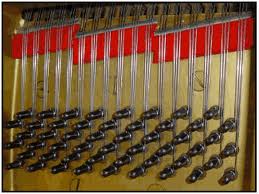
 backframe of your vertical piano. Some manufacturers have taken to using half-size posts on the ends and these half-size posts will not provide a piano with the same tuning stability as full-size posts will.
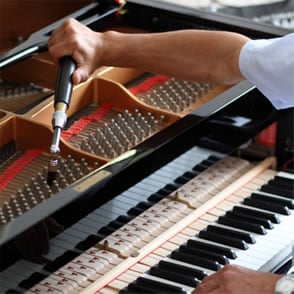 Unfortunately, some companies take a short cut when constructing the backposts to save on labor costs. Instead of extending the posts into the frame, the companies simply fit the posts into the frame. Basically, they build a picture frame and slide the posts in. These short posts do not extend into the frame and do not support the pinblock or tension nearly as well as full posts.
 supported my love of music, and I was encouraged to take piano lessons using the studio, upright piano in our home. This heirloom had sentimental value as it had been passed down from one generation to the next. My mother inherited the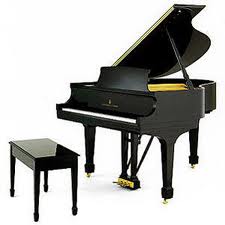
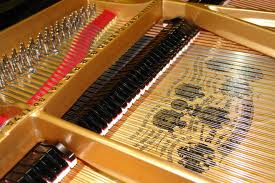 quality on looks along. But the exterior of the instrument, known as the encasement, still matters a great deal in the overall quality of a piano. All
 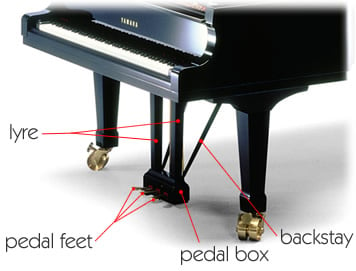 not only ruins the aesthetics of the piano but affects the sound quality and structural integrity as well.
  bombarded by a host of different options; so much so that it became a chore to choose the right one. I wanted to make sure I got the right size, performance and acoustics for a lifetime of practicing and playing, and was able to settle on picking between the Steinway and the
  ed to large halls. – Cost. For the average person; cost vs. performance is the most important factor in most purchases, and isn’t exclusive to pianos. The Baldwin piano was a worthwhile investment; yet far cheaper than any grand or even
  our
our 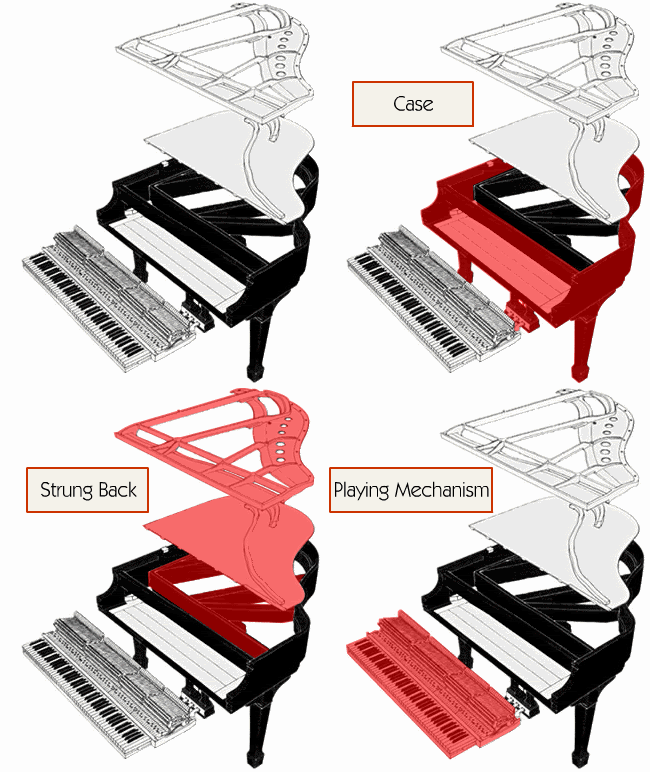 post simply can’t hold up to the string tension over time. Walk away from any grand piaon that doesn’t have six full-length backposts. The posts should also be full-size meaning they have significant width and depth, not just height.
 play your new instrument. But your shopping trip isn’t done yet, you still need to purchase the grand piano bench before you can really start playing. And just as all
  Secondly, and really most importantly, you need to choose a stool based on comfort. You will spend countless hours sitting on your bench and your comfort will impact the quality of your playing. Choose a bench with luxurious fabric and a thick, padded top to keep your sit bones from getting uncomfortable.
  maintenance and service to keep it running at its best, and extend its lifespan.
  Replace and Recondition Parts