


There are several factors that should be considered when buying a piano. It is always good to shop around so as to get the best instrument. Generally, grand pianos are superior to upright one. This is because they are carefully manufactured to provide the user with the best output. 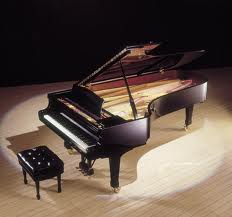
One of the most important features that they bear is that they allow faster repetition of notes, a quality which is looked upon by many buyers. However, they are designed to give out the maximum performance. The case materials are carefully selected. Moreover, the soundboard design and string configuration are the best.
Grand pianos are supported by radial back posts. This enhances strength and rigidity. Metal tone collectors are present to create a fuller and richer sound. As it is known, the most important element in a piano is the quality of the sound produced. For this reason, these kinds of instruments have got well built soundboards which are crafted uniquely. This is achieved by the use of a well-seasoned, fine-grained wood. This characteristic helps in volume projection as well as enhancing tonal clarity. For increased production of sound, they are reinforced with lengthy spruce wood.
Grand Pianos Are Different
There are several factors that should be considered when buying a piano. It is always good to shop around so as to get the best instrument. Generally, grand pianos are superior to upright one. This is because they are carefully manufactured to provide the user with the best output. One of the most important features … Continued
Do You Really Know What You’re Buying At College Piano Sales
You have probably seen these ads in your local newspaper, through direct mail or on the Internet. "College Piano Sale! New and Used Pianos by Top Manufacturers at a Bargain!" And sure, the premise seems like a great idea. You buy a used piano from a college or university music program at a discount and … Continued
Do You Really Know What You’re Buying At College Piano Sales
 You have probably seen these ads in your local newspaper, through direct mail or on the Internet. "College Piano Sale! New and Used Pianos by Top Manufacturers at a Bargain!" And sure, the premise seems like a great idea. You buy a used piano from a college or university music program at a discount and the proceeds support the program. Everyone wins.
However, this is not actually the case in these so-called college piano sales. In reality, the university or college merely plays host to the sale as part of a lending program. Here’s how it actually works.
A piano retailer lends a college or university program several pianos for its music program. In exchange for lending them these pianos free of charge, the school agrees to let the retailer hold periodic sales billed as "College Piano Sales." At these sales, yes, some of the pianos for sale were in fact used by the university music program. The vast majority of the pianos, though, are from the retailer’s store stock and include both new and used pianos that were never used in the hosting college’s music program at all. Bait and switch? Sure looks like it.
When the buyers show up for the college piano sales, they are not actually shopping for what was advertised. The hosting school does not see any proceeds from the sale and consumers who think they are getting a real bargain while helping out their local university music program are really just padding the pockets of a piano retailer.
What you will find for sale at these college piano sales are new and used 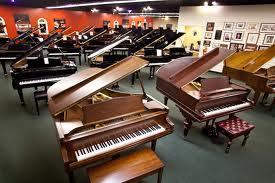 pianos from the piano retailers showroom along with one or two pianos used by the music program, though the retailer might not be upfront about which pianos were used by the program, which pianos are used period and which pianos are brand new. The bargain prices that seemed too good to be true from the advertisement are, in fact, too good to be true. Consumers, then, either buy a piano at a price they would pay in a showroom or they walk away, feeling duped by both the college and the piano retailer.
You have to wonder why college and university would participate in these piano sales programs knowing they could harm the program’s reputation when consumers find out the truth about the pianos. However, it does not seem these music programs feel much concern about the message it sends out to consumers. University officials maintain that the piano loan arrangement benefits their music programs. The college or university receives high-quality pianos at no cost on a regular basis in exchange for providing space for a piano sale.
The BBB, interviewed several universities about this. One head of the music department at a University quoted "It’s a good deal for the college." Seeming to be unconcerned that the were not receiving a quality piano for their money.
ALL PIANOS ARE NOT CREATE EQUAL – BUTTONS & SCREWS
Very few things are created perfectly the first time around. Generally, as years pass and technology improves, people find new and innovative ways of creating things. For example, automobiles have been around for well over a century and even in their first few decades of existence, they became considerably more efficient. In many ways, things … Continued
ALL PIANOS ARE NOT CREATE EQUAL – BUTTONS & SCREWS
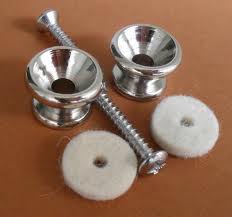 Very few things are created perfectly the first time around. Generally, as years pass and technology improves, people find new and innovative ways of creating things. For example, automobiles have been around for well over a century and even in their first few decades of existence, they became considerably more efficient. In many ways, things are improved through trial and error. Scientists and engineers have worked tirelessly testing multiple types of car engines to determine how to produce the most fuel efficient vehicles . Manufacturers are constantly monitoring their product and searching for the best solutions to common issues. Pianos are no exception.
ALL PIANOS ARE NOT CREATE EQUAL – Encasements
When you look at a piano, what you see is not what you get and you can’t gauge piano quality on looks along. But the exterior of the instrument, known as the encasement, still matters a great deal in the overall quality of a piano. Not all piano companies put as much emphasis on the … Continued
ALL PIANOS ARE NOT CREATE EQUAL – Encasements
When you look at a piano, what you see is not what you get and you can’t gauge piano quality on looks along. But the exterior of the instrument, known as the encasement, still matters a great deal in the overall quality of a piano. Not all piano companies put as much emphasis on the encasement as others so it’s important to understand why a quality encasement matters and what to look for.
ALL PIANOS ARE NOT CREATED EQUAL – Piano Features Part 2
ALL PIANOS ARE NOT CREATED EQUAL: PIANO FEATURES 101
A piano may seem like a simple instrument, but it is anything but. Pianos are complicated instruments comprised of several moving parts that collectively contribute to the overall sound. As such, pianos vary greatly in quality depending on the craftsmanship that went into construction. This blog post will focus on some key piano features and … Continued
ALL PIANOS ARE NOT CREATED EQUAL: PIANO FEATURES 101
 A piano may seem like a simple instrument, but it is anything but. Pianos are complicated instruments comprised of several moving parts that collectively contribute to the overall sound. As such, pianos vary greatly in quality depending on the craftsmanship that went into construction.
This blog post will focus on some key piano features and the hallmarks of great piano construction so you can determine a high quality piano from a lesser quality instrument.
Case Construction
The piano case houses all the inner workings. But, since it is made from natural materials, it’s subject to damage. A five-ply case construction will guarantee the case does not warp and crack over time. These cases are more stable and require nearly zero upkeep.
Pedals
Pianos with brass pedals have two advantages. First, brass is more durable than other materials and so the pedals are less likely to break. Secondly, brass is simply more attractive than other options.
Finishes
Pianos are large pieces of furniture, in addition to being an instrument, and so the final finish matters. A genuine lacquer finish is much more durable and easy to touch up. A lacquer finish is also the standard in fine furniture finishes and this finish on a grand piano acknowledges the investment you made.
Back Frame
The back frame is one of the most important piano features because it supports the cast iron frame and keeps the piano from warping and twisting from the high tension of the strings. The best back frames use dovetail joints to create a strong frame, which also helps in tuning stability.
Pinblock
The pinblock holds the tuning pins and so this piece of wood has to be strong enough to withstand as much as 40,000 pounds of tension. A four-ply pinblock is stronger and indicates the pinblock is constructed with more wood and less glue and will grip the pins tighter and for longer.
Ribs or Braces
Ribs attach to the bottom of the soundboard. They stiffen and strengthen the soundboard without making it too rigid. Notched ribs more fully support the soundboard and help the soundboard retain more resonant tonal qualities.
Understanding the key piano features of this amazing instrument will help you become a better consumer of pianos and understand your own instrument better. In the next post, learn about keybeds and why reputable companies are worth the cost.
All Pianos Are Not Created Equal – Action Part 1, Horizontal Grand
Imagine you’re having dinner with a friend when they run into a coworker. Your friend and their peer begin discussing a current project. You work in an entirely different industry, and so the jargon they used can be difficult to understand. However, after casually listening for a couple of minutes, you may begin to use … Continued
All Pianos Are Not Created Equal – Action Part 1, Horizontal Grand
 Imagine you’re having dinner with a friend when they run into a coworker. Your friend and their peer begin discussing a current project. You work in an entirely different industry, and so the jargon they used can be difficult to understand. However, after casually listening for a couple of minutes, you may begin to use context clues to put the pieces together. Although you may be completely confused at first, the more you investigate the better your understanding. This is the same experience many people have when they first begin shopping for a piano.
There are many terms used to describe pianos, and if you are looking to purchase your own you will need to better acquaint yourself with this jargon. One thing you’ll probably hear about a lot is a piano’s action. This refers to the way in which the piano reacts when you play each key or, more specifically, how the inner parts of the piano work.
There are three primary types of actions used for almost all pianos made today:
· Horizontal
· Vertical Direct Blow
· Vertical Pull Up
A horizontal action describes the action of a grand piano. As you may have noticed, grand pianos cover much 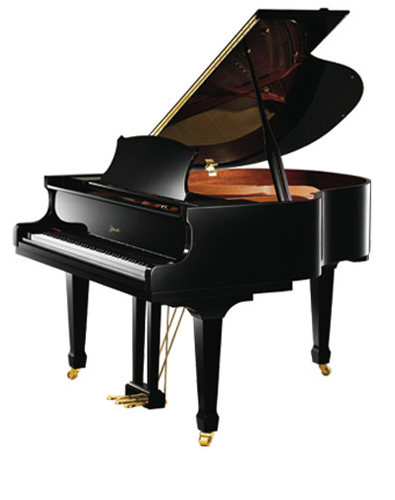 more space horizontally than vertical, upright pianos. This is due to the action inside and the way in which the strings and sounding board are laid out. One of the primary advantages to grand pianos is that they are more responsive than other piano types. When you press down upon one of the keys, the hammer travels upward to strike the underside of the strings. When you release the key, the hammer falls from the string and back into its striking position.
In future posts, I’ll explain the other two types of actions and how these types of pianos work. The more you know about each piano, the more likely you will be to make the right choice for your needs.
Have you ever played a grand piano? What advantages did you find to this type of action?
All Pianos Are Not Created Equal – Pedals
If you are looking to buy a new piano, you have likely examined nearly every square inch of multiple instruments. As I’ve explained before in previous posts, it’s important to know a piano inside and out before spending a single dime. Most people spend time reviewing the inner workings of the piano, inspecting everything from … Continued
All Pianos Are Not Created Equal – Pedals
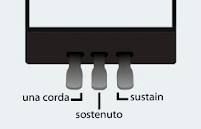 If you are looking to buy a new piano, you have likely examined nearly every square inch of multiple instruments. As I’ve explained before in previous posts, it’s important to know a piano inside and out before spending a single dime. Most people spend time reviewing the inner workings of the piano, inspecting everything from the strings and hammers to the responsiveness of the keys and the quality of the sounding board. All of these parts are integral in a piano’s performance. However, one thing many people skip over is the piano pedals.
As you likely already know, a piano has two standard pedals under the keyboard – the una corda (also called the soft pedal) and the sustaining pedal. Some American made pianos have a third, middle pedal called the sostenuto (also referred to as the bass sustaining pedal), and this pedal is very rarely used. Generally the pedals of a piano are brass plated for both look and durability.
The soft pedal causes the hammer rail to move forward halfway to the strings, and thus the hammers have further to travel. This results in a softer sound. Depressing the full sustaining pedal will move dampers away 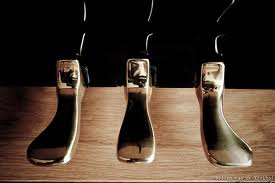 from the strings so that they may vibrate without restrictions. The bass sustaining pedal performs the same function as the full sustaining pedal, but only for bass dampers.
Next time you take time to review a piano, take time to try out the pedals to get an idea of how each affects the notes you play. If the pedals are weak, the grand piano may not be worth its full value. When you’re making this sort of investment, it is important that you get your money’s worth.
Have you used all three pedals when playing? What sorts of arrangements have you noticed necessitate the use of the middle pedal?
All Pianos Are Not Created Equal – Tuning
As any piano connoisseur or avid player knows, it takes work to maintain the tonal quality of a piano. Just as with a violin, guitar or any other stringed instrument, various outside factors can affect the tension of the strings. Everything from playing often to the level of humidity in the air can change the … Continued
All Pianos Are Not Created Equal – Tuning
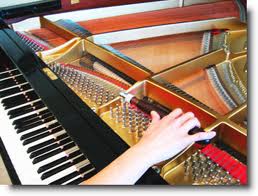 As any piano connoisseur or avid player knows, it takes work to maintain the tonal quality of a piano. Just as with a violin, guitar or any other stringed instrument, various outside factors can affect the tension of the strings. Everything from playing often to the level of humidity in the air can change the tune of an instrument, and pianos are no different. While some instruments may require careful tuning before each and every time they are played, a piano only needs to be tuned about twice per year to maintain the best sound quality.
One thing to keep in mind before investing in a piano of your own is whether or not the piano is already tuned. Some piano sellers are so interested in moving merchandise and earning a profit that they fail to properly prepare the piano for the buyer. However, a piano is an expensive purchase and it is extremely important that the salesman do everything necessary to make sure your new piece is in top quality. When choosing your piano, always ask if the piano has been serviced with a tuning.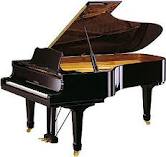
Cooper Music understands the importance of top tonal quality in our pianos, and so we have equipped each professional instrument with a 2.0 X 2 ½ inch blued steel piano tuning pins for easy and secure tuning. Additionally, double-blued caps are more effective in resisting rust and corrosion. Prior to shipment, each of our pianos receive two chippings and tunings.
A finely tuned piano is a beautiful instrument, but an out-of-tune piano is often a source of frustration for any buyer. Do you think all pianos should be tuned prior to purchase?